Cold Laser Therapy, also known as Low-Level Laser Therapy (LLLT) or Photobiomodulation
- an integral part of each Brain TheraCamp ™ for Children, Adults and High Achievers
Brain Performance, Amplified: Cold Laser Protocols at Brain Theracamp
The Melillo Method Advantage: Lighting Up Learning
At Brain Theracamp, we don't just use Cold Laser Therapy (also known as Photobiomodulation or PBM); we integrate it into a comprehensive system of Functional Neurology protocols developed by a practitioner trained in the Melillo Method and special education.
This approach is specifically designed for children and adults to stimulate and rewire the brain for maximum academic and functional performance. We transition from foundational skills to complex reasoning, using the laser to prime the brain for optimal neuroplasticity at every step.
How Our Cold Laser Protocol Works: The Science of Cellular Energy
The core of our therapy is the Avant LZ30 Pro Laser, which delivers targeted light energy to the brain.
Targeting Brain & Body Function
-
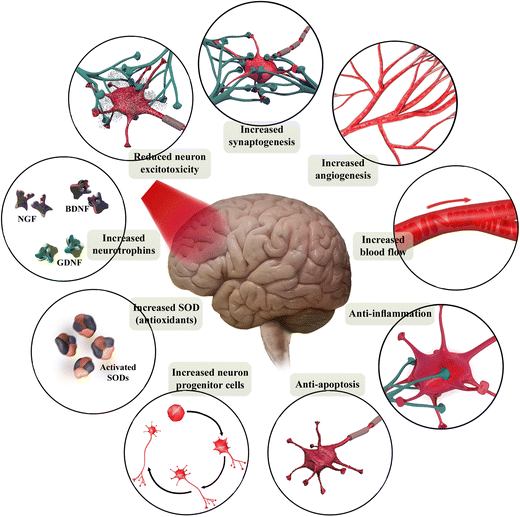
Mitochondria Powerhouse: The laser light penetrates tissue to stimulate the mitochondria (the cell's power source) in brain and body cells. This dramatically increases the production of ATP (cellular energy).
-
Neuroinflammation Reduction: Increased cellular energy helps the brain stabilise, leading to a significant reduction in neuroinflammation—a key factor in poor focus, brain fog, and recovery challenges.
-
NeuroPlasticity: The energy boost supports the formation of new neural connections (neurogenesis) and accelerates the repair of damaged tissue in both the brain and the body.
Precision Targeting with Brodmann Areas
Our protocols are not generic. Each exercise precisely targets specific Brodmann Areas (BA)—the brain's specialised functional regions—to ensure the maximum effect. For example, we target BA 40 for numerical thought and BA 44 for speech fluency.
Our 3-Stage, Multi-Domain Protocol
Our system is structured into 3 Levels of increasing difficulty and laser intensity, covering the most critical academic and functional domains:
MATHS PROTOCOLS
-
Stage 1: Foundational Numeracy & Arithmetic
-
Goal: Build number sense, rapid mental calculation, and basic arithmetic fluidity.
-
Example: Mental Math Drills, Number Line Jumps.
-
-
Stage 2: Applied Math & Problem Solving
-
Goal: Connect math concepts to real-world scenarios and solve multi-step problems.
-
Example: Solving Multi-Step Word Problems, Creating Equations from Data.
-
-
Stage 3: Abstract & Advanced Reasoning
-
Goal: Develop formal logic, inductive reasoning, and complex sequential thought.
-
Example: Geometric Proofs, Advanced Brain Teasers.
-
READING PROTOCOLS
-
Stage 1: Foundational Literacy & Decoding
-
Goal: Establish the strong neural link between sounds (phonemes) and letters (graphemes) for accurate decoding.
-
Example: Rhyme & Alliteration Match, Letter-Sound Sorting.
-
-
Stage 2: Fluency & Comprehension
-
Goal: Increase reading speed and rhythm while improving the ability to grasp the main ideas and context.
-
Example: Speed Reading & Summarization, Vocabulary Context Clue Hunt.
-
-
Stage 3: Advanced Reading & Analysis
-
Goal: Develop critical thought, the ability to extract subtle meaning, and analyze complex arguments.
-
Example: Complex Inference, Argument Mapping.
-
WRITING PROTOCOLS
-
Stage 1: Foundational Mechanics & Sentence Construction
-
Goal: Develop fine motor control, correct letter formation, and basic sentence-level composition.
-
Example: Letter Formation & Tracing, Copying Simple Sentences.
-
-
Stage 2: Fluency & Paragraph Composition
-
Goal: Build writing rhythm, fluency, and the ability to compose cohesive, well-organised paragraphs.
-
Example: Themed Rhythmic Writing Drill, Short Narrative Composition.
-
-
Stage 3: Argumentative & Creative Composition
-
Goal: Master high-level planning, self-correction, and the ability to write about abstract concepts.
-
Example: Self-Correction & Revision, Abstract to Concrete Writing.
-
SPEECH & LANGUAGE PROTOCOLS
-
Stage 1: Articulation & Foundational Language
-
Goal: Improve clarity, simple sound repetition, and basic receptive vocabulary.
-
Example: Simple Echo & Repetition, Sound-Picture Matching.
-
-
Stage 2: Fluency & Expressive Language
-
Goal: Develop smooth speech, the ability to narrate events, and answer complex "why/how" questions.
-
Example: Conversational Storytelling, Complex Q&A.
-
-
Stage 3: Conversational & Pragmatic Speech
-
Goal: Engage in open-ended discussions, express emotion appropriately, and master social communication skills.
-
Example: Independent Conversation, Prosody Practice (Vocal Tone).
-
VISUAL & COGNITIVE PROTOCOLS
-
Stage 1: Foundational Visual & Cognitive Processing
-
Goal: Establish core visual attention, tracking, and working memory.
-
Example: Visual Scanning & Tracking, Simple Pattern Completion.
-
-
Stage 2: Complex Pattern Recognition & Reasoning
-
Goal: Identify abstract patterns, solve analogies, and develop relational logic skills.
-
Example: Analogy Solving, Non-Verbal Matrix Tasks.
-
-
Stage 3: Abstract & Strategic Thinking
-
Goal: Integrate problem-solving, develop executive function, and manage information under high cognitive load.
-
Example: Collaborative Strategic Gaming, Complex Verbal Inference.
-
MOTOR COORDINATION, GAIT, & BALANCE
-
Stage 1: Foundational Motor Control & Balance
-
Goal: Build core neural networks for posture, static balance, and basic movement stability.
-
Example: Static Balance Single-Leg Stance, Basic Heel-to-Toe Gait.
-
-
Stage 2: Dynamic Coordination & Timing
-
Goal: Integrate rhythm and coordinate complex, dynamic, and sequential movements.
-
Example: Rhythmic Marching with Hand Taps, Dual-Task Speech (Balancing while talking).
-
-
Stage 3: Motor-Cognitive Integration
-
Goal: Perform complex motor and verbal tasks simultaneously (dual-tasking) to enhance cognitive processing speed.
-
Example: Rhythmic Agility Drill with Verbal Sequencing, Collaborative Motor-Cognitive Challenge.
-
Laser Dosage Progression
The energy density is carefully increased at each level to drive greater neuroplasticity and challenge the brain in co-activation.
-
Stage 1 (Foundational): Low Dose for basic sensory and motor control.
-
Stage 2 (Applied/Fluency): Mid Dose for processing speed and complex skills.
-
Stage 3 (Advanced): High Dose for abstract reasoning and executive function.
Integrated Tools for Enhanced Results
We combine the laser with specialized feedback and stimulation devices to ensure maximal brain engagement:
-
Brain Stimulation & Feedback Tools: Avant Laser, Forebrain, TENS, Rezzimax
-
Motor-Cognitive Tools: BOSU, Balance Beam, Interactive Metronome, and Eyelights.
-
Interactive Applications: Digital Therapeutics on an iPad, a touch screen and custom cognitive apps.

Ready to unlock your or your child's full brain potential?
Contact us today to learn more about how our advanced comprehensive brain-body protocols can make a difference.
Go to Pre Brain TheraCamp Screening Call and complete an Application Forms to get the Brain Function pre- assessment for a Child, an Adult or a High Achiever.